
Canadian Phosphate Limited
ASX: CP8 | OTCQB: CPHOF
Canadian Phosphate Limited (ASX: CP8) is advancing three sedimentary rock phosphate projects across North America: Wapiti and Fernie in British Columbia, Canada, and Diamond Mountain in Utah, USA. The Company is working toward an integrated, mine-to-market phosphate business with the potential to serve fertilizer and lithium iron phosphate (LFP) battery supply chains.
Stock Information

Recent News
Investor Presentation
Regulatory Filings
As an Australian issuer, Canadian Phosphate Limited lists on the Australian Securities Exchange and releases its continuous disclosure through ASX announcements. Its shares also trade in the United States on the OTCQB Venture Market.
Investment Highlights
Canadian Phosphate is building a North American phosphate business from three projects across British Columbia and Utah. Drilling was completed in Canada this year, an advanced asset has been added in the United States, and the company is working toward supplying both fertilizer and battery markets through a phased approach, starting with fertilizer.
Phosphate Is a Critical Mineral
Phosphate is essential to modern agriculture because it is used to produce the fertilizers that support crop growth, and it is classified as a critical mineral in the United States, Canada, Australia and the European Union. Canada imports effectively all of the phosphate it uses, principally from the United States and Morocco.
Wapiti 2026 Drill Campaign Completed
Canadian Phosphate's 100%-owned Wapiti project in British Columbia is targeting a maiden JORC Mineral Resource Estimate in the fourth quarter of 2026, following completion of its 3,000-plus-metre drill campaign. Recent announcements reporting visual and pXRF results from 18 drill holes, representing two-thirds of the campaign, extended the phosphate Main Zone nine kilometres south along the eastern Red Deer syncline.
Diamond Mountain - Utah Advanced Phosphate Asset
Canadian Phosphate completed the acquisition of a 100% interest in the Diamond Mountain phosphate project in July 2026. The project sits on Utah State land adjacent to Simplot's Vernal phosphate mine and adds an advanced United States asset with nearby power, road access and established mining infrastructure.
A Mine-to-Market Strategy
Canadian Phosphate is pursuing an integrated mine-to-market strategy in Canada, using the country's only advanced sedimentary rock phosphate deposits, together with access to cost-effective natural gas and sulfur, to develop a single superphosphate (SSP) plant in Canada. Canada imports 100% of its phosphate fertilizer needs, predominantly from the United States and Morocco.
A$5.2 Million Raised to Advance Projects
A renounceable rights issue and follow-on placement raised A$5.2 million before costs during the June quarter, with all Canadian Phosphate directors participating. The proceeds support drilling at Wapiti, the completed Diamond Mountain acquisition, associated permitting and exploration programs, and working capital.
Experienced Board and Advisers
Managing Director and Chief Executive Officer Daniel Gleeson leads Canadian Phosphate, supported by Non-Executive Chairman Stuart Richardson and Non-Executive Directors Malcolm Weber and Peter Doyle. The Strategic Advisory Board includes Robert Bell, former Chief Commercial Officer, Coal, at Teck Resources, along with Marten Walters, Cory Avison and Nate Schmidt, whose experience spans mine operations, commodity marketing and logistics.
Digging Deeper
Canadian Phosphate Limited (ASX: CP8 | OTCQB: CPHOF) is an Australian-listed mineral exploration and development company with three sedimentary rock phosphate projects in North America, all of them 100% owned: Wapiti and Fernie in British Columbia, Canada, and the Diamond Mountain Phosphate Project in Utah. Sedimentary rock phosphate is phosphate-bearing rock laid down in ancient marine basins, and it is the raw material for phosphate fertilizers and phosphoric acid.
Wapiti and Fernie hold the only advanced sedimentary rock phosphate deposits in Canada, a country that is self-sufficient in nitrogen and potash and imports all of its phosphate fertilizer. Diamond Mountain, acquired on July 31, 2026, adds an advanced project in the United States adjacent to an established phosphate mine in Vernal, Utah. That puts Canadian Phosphate in a proven American phosphate district and in a U.S. market where a single producer holds approximately 70% of monoammonium and diammonium phosphate (MAP and DAP) production capacity.
Alongside the development projects, Canadian Phosphate has an established business that has supplied naturally occurring rock phosphate to regenerative and organic growers across North America for more than a decade. Its products are known for low concentrations of heavy metals and for their suitability in certified organic farming, and previously mined phosphate rock held in Montana lets it keep supplying those customers while the larger projects move through exploration and study.
Over the longer term, CP8 intends to move in stages from natural rock sales, its business today, to single superphosphate (SSP), a processed dry fertilizer, and later to phosphoric acid for liquid fertilizers and for lithium iron phosphate (LFP) batteries, the battery chemistry that uses phosphate in its cathode. Each processing plant in that mine-to-market sequence is still a proposal, and natural rock phosphate is the only product sold today.
Most of the 2026 field work went into Wapiti, where 21 diamond drillholes totalling 3,279m were completed. Drilling demonstrated approximately nine kilometres of strike continuity in the phosphate-bearing seam on the east limb of the Red Deer Syncline. Every intersection so far rests on visual logging, pXRF (portable X-ray fluorescence) and downhole gamma readings only, with laboratory assays still to come. CP8 plans to use the 2026 results to progress preparation of a maiden JORC Mineral Resource Estimate for Wapiti in the fourth quarter of 2026. JORC is the Australasian Code for Reporting of Exploration Results, Mineral Resources and Ore Reserves, the reporting standard for ASX-listed miners.
Phosphate is a finite mineral and the source of phosphoric acid, and roughly 90% of the rock that is mined goes into fertilizer, with the balance going to industrial uses such as detergents, food processing and water treatment. Phosphorus is an essential crop nutrient with no substitute, the “P” in the nitrogen, phosphorus and potassium (NPK) fertilizers behind global crop yields, and LFP batteries have added a newer, growing use because phosphate forms part of the cathode chemistry in each cell.
Fortune Business Insights values the global phosphate market at $180.6 billion in 2025 and projects growth at a 5.6% compound annual rate to about $300 billion by 2034. Supply is concentrated in a handful of countries: Morocco holds roughly 70% of global phosphate reserves, and China accounts for roughly 40% of global production while restricting its exports.
Fertilizer supply chains have become increasingly politicized as U.S. tariffs, instability in the Middle East and the war between Russia and Ukraine tighten supply and raise shipping and input cost risk, and China’s export limits leave buyers dependent on fewer producers. Canada imports all of its phosphate fertilizer, about 60% of it from the United States, even though it is fully self-sufficient in nitrogen and potash, the “N” and “K” in NPK. Phosphorus is the one gap in its domestic fertilizer supply.
Canada added phosphate to its critical minerals list in June 2024, the United States followed in November 2025, and the European Union lists it as well, recognition of its role in food security through fertilizer and in the energy transition through LFP batteries.
Fertilizer demand follows long-term trends in food production, with world population projected to rise from 8.2 billion in 2024 to 10.3 billion in the mid-2080s, and more than 80% of Canadian prairie soils are already deficient in phosphorus. Batteries add a second, fast-growing source of demand: about 90% of LFP cathode materials are produced in China, and CP8 expects energy storage for AI data centres to become a major driver of LFP growth beyond electric vehicles.
Phosphate fertilizer production in the United States is highly concentrated as well, with Nutrien’s 2024 handbook putting Mosaic at about 70% of U.S. MAP and DAP production capacity, Nutrien at about 18%, Simplot at about 8% and Itafos at about 4%. Simplot draws its rock from Utah and Idaho, the same region where Diamond Mountain sits.
Wapiti is a 100% owned sedimentary phosphate project in British Columbia where the phosphate-bearing Whistler Member comes to surface on both limbs of the Red Deer Syncline, a trough-shaped fold in the rock layers that runs north to south for about 28 kilometres of strike. Strike length is the distance a mineralized layer can be traced along the ground.
A 2025 study produced a JORC-compliant Exploration Target for Wapiti, a range estimate of the potential tonnage and grade of a deposit, over 11.5 kilometres of strike, leaving a further 16.5 kilometres of strike and the central syncline area open. The target is 20.2 to 28.6 million tonnes grading 15.76 to 15.96% P₂O₅, or phosphorus pentoxide, the standard measure of phosphate content in rock and fertilizer. The Exploration Target was classified in accordance with the JORC Code and covers about 40% of Canadian Phosphate’s Wapiti tenements in British Columbia. The potential quantity and grade of the Exploration Target is conceptual in nature. There has been insufficient exploration to estimate a Mineral Resource and it is uncertain if further exploration will result in the estimation of a Mineral Resource.
In May 2026 the British Columbia Ministry of Mines and Critical Minerals granted CP8 a five-year Multi-Year Area-Based exploration permit for the Wapiti project, covering up to 56 drill holes and a 500-tonne bulk sample, a larger extraction of material used for processing and product testing. Diamond drilling began in July 2026 under the management of Dahrouge Geological Consulting as a 3,000-metre first stage designed to test priority areas within the Exploration Target and support a maiden JORC Mineral Resource Estimate (MRE), which classifies tonnage and grade into Measured, Indicated and Inferred categories by level of geological confidence.
Holes WP26-001 to WP26-003 tested the down-dip extension of historical drilling and intersected the Main Zone at a greater downhole depth than any historical result, up to 158 metres downhole, or approximately 130 metres true vertical depth below surface. Holes WP26-004 to WP26-008 stepped progressively south, and the intersection in WP26-008 sat more than 3 kilometres south of the nearest historical drillhole, extending the known strike length of the Main Zone by more than 3 kilometres.
Nine more holes had been completed on the east limb, and eight of them intersected the Main Zone; WP26-016 was abandoned in thick overburden before reaching the target horizon. Across 21 drillholes and 3,279 metres, the program demonstrated about 9 kilometres of strike continuity on the east limb and materially improved CP8’s understanding of the continuity, geometry and structure of the deposit. All of the 2026 intersections rest on visual logging, pXRF readings and downhole gamma surveys, which measure natural radioactivity, and none has yet been confirmed by laboratory assay. Reported intersections are downhole core lengths, and true widths remain to be defined.
Managing Director Daniel Gleeson said on September 9, 2026: “Each stage of drilling has provided valuable new information regarding the structure, geometry and continuity of the phosphate horizon and has allowed us to progressively refine our geological model.”
Drilling then moved to the western limb, where WP26-018 had intersected the Main Zone and historical drill holes would guide the first new targets, and drilling at Wapiti was completed in September 2026. CP8 said it would put additional funds into extending drilling beyond the original 3,000 metres while contractors and personnel were still mobilized, alongside field mapping and sampling and a planned high-resolution LiDAR survey, a laser-based aerial survey that will provide the topographic surface for future studies.
Samples from the program are at AGAT Laboratories for analysis, and CP8’s 2027 outlook lists metallurgical results from the 2026 drilling, further drilling at Wapiti and Diamond Mountain between May and August 2027, and, pending JORC classification, the start of a Preliminary Economic Assessment or scoping study, an early-stage study of a project’s potential economics. Geological modelling from the 2026 campaign will inform the next stage of drilling at Wapiti, which is planned for 2027.
Fernie is CP8’s second 100% owned project in British Columbia, with tenures that hold more than 60 kilometres of known phosphate strike, all of it still requiring further exploration. Together, Wapiti and Fernie carry more than 88 kilometres of combined strike length and form the only domestic sedimentary phosphate source for the Prairie agricultural region of Western Canada.
Bulk sampling at Fernie has already been carried out at scale, with an 8,000-tonne bulk sample completed at the Marten site in 2022 that averaged 22.5% P₂O₅. A 10,000-tonne bulk sample at Barnes holds an approved permit, and a further 10,000-tonne sample at the Pump Station site is in permitting. The Barnes sample is meant to support expanded product trials, customer qualification and market development across Western Canada.
In September 2026 Canadian Phosphate pushed extraction of the Barnes bulk sample to the second quarter of 2027 so that additional funding could go to the Wapiti program, and it is supplying near-term customer requirements from the roughly 20,000 tonnes of previously mined phosphate rock it holds in Montana. Several customers are commissioning and ramping up expanded production capacity, and as those operations reach continuous production CP8 expects demand for phosphate rock to become more consistent and potentially increase materially. The revised Barnes timing matches product availability to that anticipated increase.
Next steps at Fernie include lodging an Industrial Mine Permit application for about 150,000 tonnes to serve the existing regenerative business, completing an exploration target and geological model, and applying for a Multi-Year Area-Based Exploration Permit on the strength of that exploration target. Drilling, the first exploration stage in the development plan for CP8’s second Canadian project, is planned for 2027.
Canadian Phosphate completed its purchase of a 100% interest in the Diamond Mountain Phosphate Project from Revival Gold Inc. and Utah Mineral Resources LLC on July 31, 2026. The project covers approximately 550 hectares in Uintah County, Utah, within the Meade Peak Phosphoria Formation, adjacent to Simplot’s Vernal mine and beneficiation complex, a long-running phosphate mine of 4 million tonnes per annum.
Located on State land about 20 minutes from Vernal, Utah, the project has sealed roads and power to the site. It lies immediately east of the Federal Known Phosphate Leasing Area and borders the existing Simplot phosphate leases that feed the Vernal plant.
Diamond Mountain carries a foreign estimate of 26.8 million tonnes in the Measured and Indicated categories and 23.1 million tonnes in the Inferred category, averaging 19.67% P₂O₅ in a laterally continuous seam that ranges from 3.5 to 5.6 metres thick and averages 4.4 metres. The estimate comes from a 2014 technical report prepared by Norwest Corporation for Strata Minerals Inc. under National Instrument 43-101 (NI 43-101), the Canadian standard for disclosure of mineral projects. A foreign estimate is one prepared under a reporting code other than JORC and not reported in accordance with the JORC Code.
The foreign estimate is not reported in accordance with the JORC Code, and a Competent Person has not done sufficient work to classify the foreign estimate as Mineral Resources or Ore Reserves in accordance with the JORC Code, and it is uncertain that, following evaluation and/or further exploration work, the foreign estimate will be able to be reported as Mineral Resources or Ore Reserves in accordance with the JORC Code.
A third-party Qualified Person prepared the foreign estimate under NI 43-101 standards, and CP8 has not independently validated it; the company reports it solely in the context of a project acquisition.
Total consideration runs up to US$3.0 million, of which CP8 paid US$250,000 in cash at completion and issued 6,041,737 shares representing US$750,000. A further US$500,000 is due on the first anniversary of completion, in cash or shares at the seller’s discretion, and deferred consideration of up to US$1.5 million is payable in cash or shares, at CP8’s election, on or before the first anniversary of commercial production.
For 2026, the work program calls for validating historical drilling, assay, density and survey data, updating the geological model and starting verification and step-out drilling as permitting allows. CP8 also plans to pursue further private mineral rights, apply for an exploration permit on private land and on land administered by Utah’s School and Institutional Trust Lands Administration (SITLA), and complete geological baseline work. Infill and resource-definition drilling would follow in 2027, along with preparation of a JORC Mineral Resource estimate, subject to sufficient supporting data and Competent Person assessment.
When the acquisition closed on July 31, 2026, Managing Director and CEO Daniel Gleeson said: “Subject to results and Competent Person assessment, our objective is to convert the current foreign estimate entirely into the Measured and Indicated categories.”
From there the plan runs to expanded metallurgical work and the start of a Preliminary Economic Assessment in 2028, infill drilling and the start of a Pre-Feasibility Study in 2029, and the start of a Definitive Feasibility Study in 2030. A Pre-Feasibility Study is the intermediate stage of study, and a Definitive Feasibility Study is the most detailed level used to support a development decision. Diamond Mountain complements the Canadian projects and gives CP8 more exposure to domestic North American fertilizer and LFP battery supply chains, in a jurisdiction that actively supports fertilizer security and critical mineral development.
Canadian Phosphate’s development model runs through four phases, each tied to a more processed product than the one before. Phase 1 is run-of-mine (ROM) rock phosphate fertilizer, rock sold as a powdered product following basic crushing via third-party contracting, requiring minimal capital expenditure. Phase 2 adds a low-capex single superphosphate plant producing a dry fertilizer of about 20% P₂O₅. Phase 3 is a medium-capex new technology thermal plant producing liquid fertilizer and material for LFP batteries and for food and beverage uses. The technology is still under development and yet to be proven at a commercial scale. Phase 4 is a high-capex phosphoric acid plant producing merchant-grade acid of 54% P₂O₅ for products such as MAP/DAP and LFP.
Phases 2 through 4 are proposed plants, and early discussions are under way on offtake from the first of them. The sequence is meant to open up earlier revenue opportunities while moving the business toward higher-value downstream products. SSP processing requires access to economical sulfuric acid and to natural gas or hydroelectricity.
As the company describes it, the proposed SSP plant is a modular, scalable design built on proven technology, with low capital intensity compared with a MAP facility and inputs that are available at reasonable cost in Canada. SSP production also avoids the waste piles of phosphogypsum, the gypsum by-product of conventional phosphoric acid production. CP8 plans two SSP plants, located to serve the agricultural region of the Western Prairies.
SSP carries about 20% P₂O₅ along with 12% sulfur and 18% calcium, while MAP carries about 52% P₂O₅ and 11% nitrogen with no sulfur or calcium. Where SSP’s sulfur content meets the crop’s requirement, it can save a separate sulfur application. Canada is the world’s largest producer of canola, a crop that needs a lot of phosphorus and sulfur, and calcium is needed on Canada’s sodic soils, which contain excess sodium, so SSP delivers all three nutrients in one product.
Salt index measures how much a fertilizer raises the salt concentration of the soil solution, and SSP rates about 10, in the low range, against about 32 for MAP, low enough for safe direct seeding with the fertilizer. Placement, application rate and suitability for seeding still depend on the crop and the soil.
In Alberta, the proposed operations would turn Canadian phosphate into fertilizer close to Western Canada’s major agricultural regions and reduce reliance on imported finished fertilizers. Rail access to sulfuric acid supplies in British Columbia and Alberta, along with regional natural gas and hydroelectricity for energy, gives CP8 input costs it expects to be structurally lower than offshore alternatives, and proximity to market is expected to cut freight costs and supply chain risk.
Canadian Phosphate also signed a non-binding Letter of Intent in November 2025 with Novaphos Inc., a U.S.-based developer of phosphate processing technology, to evaluate the Novaphos process on CP8 ore, assess potential project locations in British Columbia and Alberta and develop a framework for future definitive agreements. CP8 noted at the time that there is no certainty definitive agreements will be entered into. The 500-tonne Wapiti bulk sample will be used to assess whether Wapiti phosphate is suited to producing purified phosphoric acid and super phosphoric acid with the Novaphos technology.
CP8’s plan takes all three sites from acquisition through initial development by 2030, with each moving through land acquisition, baseline studies and permitting, initial exploration, resource definition and feasibility studies, and finally construction readiness for a processing plant.
On CP8’s own read, its deposits sit within large sedimentary basins with a laterally continuous formation, and phosphate outcropping at surface across multiple zones allows targeted drilling. It combines that drilling with historical results and modern 3D geological modeling in a program focused on classifying the deposits under the JORC Code.
Canadian Phosphate held cash and cash equivalents of A$6.574 million at June 30, 2026, its half-year balance date. During the June 2026 quarter it raised A$5.2 million before costs through a fully subscribed A$4.85 million renounceable rights issue and an A$350,000 follow-on placement, with every director taking part. The proceeds fund exploration at Wapiti, work at Diamond Mountain and continued development across the North American phosphate portfolio.
Shares on issue at the same date totalled 388,486,575 fully paid ordinary shares, before the 6,041,737 shares issued to the Diamond Mountain vendors in July 2026. Board members hold about 13% of the shares, and the top 20 shareholders together held about 51% as of April 20, 2026.
CP8’s shares trade primarily on the Australian Securities Exchange, and since August 20, 2026 the ordinary shares have also traded on the OTCQB Venture Market in the United States under CPHOF. The quotation lets eligible investors trade the shares in US dollars during North American market hours through participating broker-dealers, and it involved no new securities and no capital raising.
When OTCQB trading began on August 20, 2026, Daniel Gleeson said: “The quotation makes Canadian Phosphate more accessible to the substantial pools of North American capital focused on agriculture, fertilizer security, critical minerals and domestic supply-chain development.”
In September 2026 CP8 was included in the Canada Investment Summit Pitchbook, part of a Government of Canada-led initiative championed by Prime Minister Mark Carney to attract strategic global capital into Canadian projects, and later in a separate Invest Alberta Pitchbook covering prospective projects in Alberta. Daniel Gleeson received a private invitation to Invest Alberta meetings and receptions. Inclusion in either Pitchbook does not constitute government funding, endorsement or a commitment to invest in Canadian Phosphate or its projects.
CASACOM has been appointed CP8’s public affairs and government relations adviser in Canada, supporting engagement with federal and provincial governments and helping identify potential government funding opportunities and strategic support programs.
Daniel Gleeson, Managing Director and Chief Executive Officer, has more than 20 years of experience in agribusiness across Australia, Asia, North America and Europe. He works with a board of three non-executive directors and a Strategic Advisory Team, formed in February 2026, whose experience spans phosphate geology, fertilizer manufacturing, project development, processing and North American operations.
Dylan Treadwell, VP Mining & Operations, is an experienced manufacturing and mining professional with more than eight years of management experience in the mining, crushing and processing of aggregates and cement. He has managed mining teams of up to 50 personnel and has overseen various mine development and improvement projects, including quarry expansions and the installation of fixed and mobile crushing plant infrastructure.
Stuart Richardson, Non-Executive Chairman, has more than 30 years of investment banking experience in both Australian and overseas capital markets and is a co-founder of Blackwood Capital.
Malcolm Weber, Non-Executive Director, has more than 35 years of experience as a financial adviser, with a background in corporate, institutional and client interactions.
Peter Doyle, Non-Executive Director, joined the board on May 12, 2026 and brings more than 30 years of mining industry experience across planning, exploration, development and production, along with experience in corporate development, capital markets and the advancement of North American resource projects.
Robert Bell, a member of the Strategic Advisory Team, is a mining executive with more than 30 years of experience in coal, marketing and bulk logistics, and he previously served as Chief Commercial Officer, Coal, at Teck Resources.
Cory Avison, a member of the Strategic Advisory Team, brings nearly 20 years of experience across the fertilizer, chemical processing and refining industries, including single superphosphate operations.
Marten Walters, also on the Strategic Advisory Team, is a former president of KEMWorks Technology Inc. and specializes in phosphate project development and technology.
Nathan Schmidt, a professional geologist with more than 15 years of experience advancing mineral exploration programs, sits on the Advisory Board and is employed by Dahrouge Geological Consulting. He is the Competent Person for CP8’s Wapiti exploration reporting, the qualified professional who takes responsibility for that technical information under the JORC Code. He holds unvested performance rights in Canadian Phosphate and is therefore not considered independent of the company.
This communication is neither an offer to sell nor a solicitation of an offer to buy, nor a recommendation of any securities of the company mentioned herein.
Canadian Phosphate Limited (the “Company”) and its counsel have reviewed the content of this page as well as the accompanying presentation (“Company Presentation”) displayed on this page. To the best of its knowledge, the Company does not believe this content to be misleading or inaccurate in any material respect, nor does it believe there are any material omissions with respect to such content. The Company does not believe the contents of the page or the Company Presentation to contain any non-public material information.
Information and opinions presented in the Company Presentation are provided by the Company, and B2i Digital makes no representation as to their accuracy or completeness. The information contained on this page is not intended to constitute any form of advice, and the information provided is not intended to provide a sufficient basis on which to make an investment decision. It is not investment research, nor does it constitute a research recommendation, as it does not constitute substantive research or analysis. This information is not to be relied upon in substitution for the exercise of independent judgment.
Information, opinions and estimates contained on this page or in the Company Presentation reflect judgments by the Company as of the original date of publication by the Company and are subject to change without notice. Past performance should not be taken as an indication or guarantee of future performance, and no representation or warranty, express or implied is made regarding future performance.
The Company's ordinary shares are listed on the Australian Securities Exchange (ASX: CP8) and are also quoted in the United States on the OTCQB Venture Market (OTCQB: CPHOF). A complete description of the risks and uncertainties relating to the Company and its securities can be found in the Company's announcements and periodic reports lodged with the Australian Securities Exchange, available for free at www.asx.com.au.
Information on this page may relate to penny stocks, which may also be referred to as low-priced stocks. Penny stocks are low-priced shares typically issued by small companies. Penny stocks involve greater than normal risk, they may be less liquid than other stocks (i.e., more difficult to sell), and there may be less reliable information available regarding such stocks. Investors in penny stocks should be prepared for the possibility that they may lose their entire investment.
B2i Digital or its related entities may own securities of the Company. To comply with Rule 17(b) of the Securities Act of 1933, as amended, B2i Digital must provide full disclosure of all compensation received for investor awareness services provided by the Company.
The Company is a client of B2i Digital. The Company agreed to pay B2i Digital no greater than $100,000 in cash for 12 months of digital marketing consulting and investor awareness services.
Our portfolio of North American phosphate projects sit within this tightening global market.
Coverage by Tim Hammerich of The Ag Information Network of the West: https://lnkd.in/dZhV5mw2
#CP8
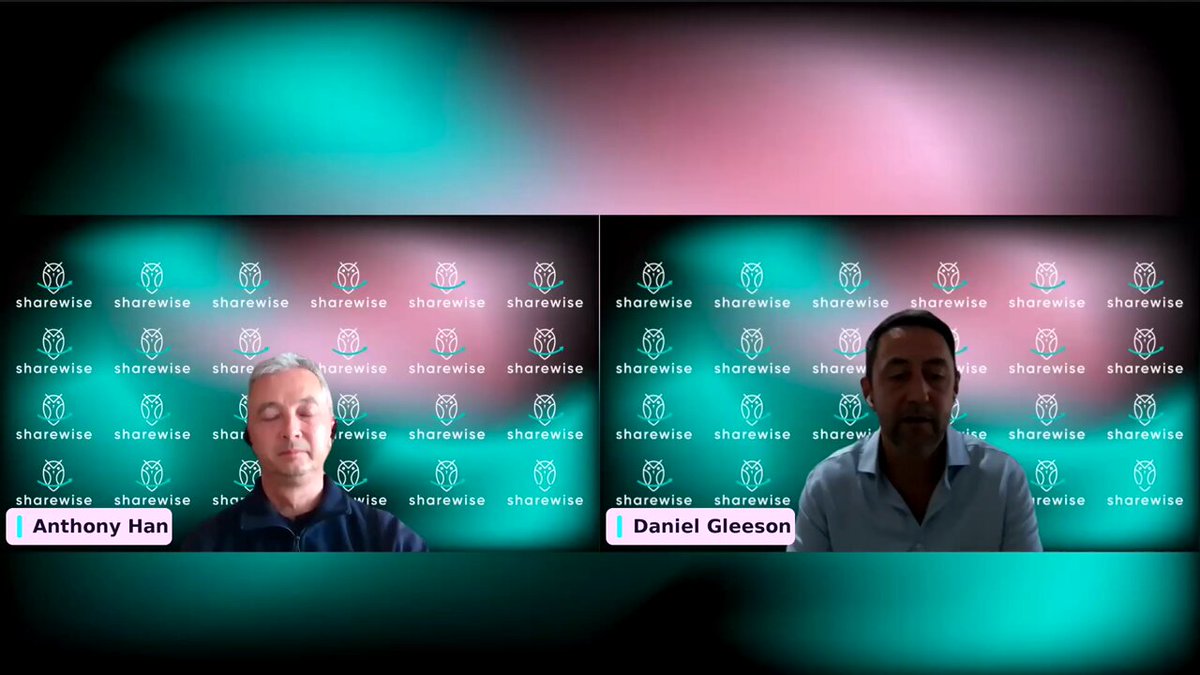
MD Daniel Gleeson discusses the opportunity presented by #CP8's acquisition of Diamond Mountain, Utah during a @sharewiseau webinar
📺https://t.co/BB0A6z6TyH
#phosphate https://t.co/I0g9AsLjEd
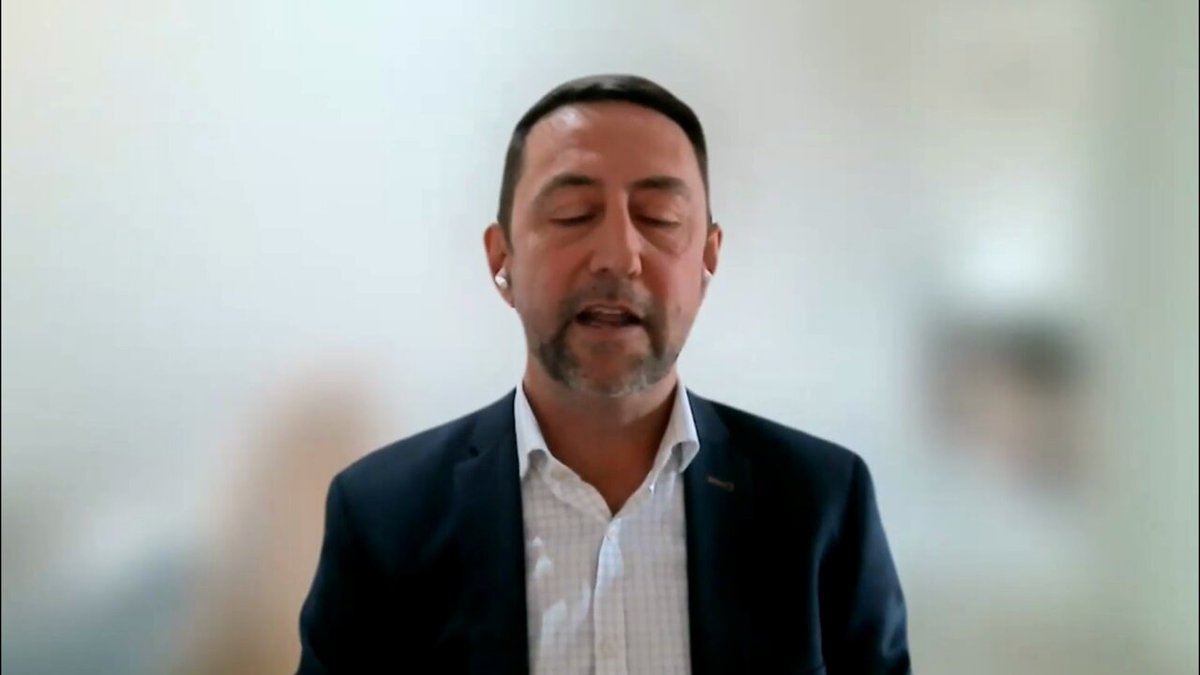
📺Webinar replay here: https://t.co/KLYnDhpOS6 https://t.co/ySw2nEOdKl

Our Managing Director and CEO Daniel Gleeson commented: "Completion of our acquisition of Diamond Mountain is an important step in CP8's strategy to become a major North American phosphate supplier. The Project provides scale, in an established U.S. phosphate mining region, adjacent to a long-running 4Mtpa phosphate mine."
Read the full announcement: https://lnkd.in/gzuMMc96
#ASX #CP8 #Investment #Phosphate #Fertiliser #Batteries #Canada
#CP8 #phosphate #fertilizer #Utah #Canada


Funds will advance our #phosphate projects in Canada and the USA 🌱
🔗 https://t.co/lQcJYYZjef
#ASX #CP8 #Canada #USA https://t.co/zJCfl6drVC

🔗 https://t.co/XnRTQcd57S
#CP8 https://t.co/euFmOXavGC
🔗Notice of Meeting: https://lnkd.in/gx-P-Vu8
🔗Letter to Shareholders: https://lnkd.in/gQmNiDam
#CP8 #phosphate #fertilizer #Canada
Important Resources
Including an At A Glance PDF, a document tailored to those who just want quick and summarized information.
Experienced Leadership Across Mining, Finance and Markets
Canadian Phosphate's directors and advisers bring experience spanning mineral exploration, mine development and production, investment banking, and bulk commodity marketing and logistics across Canada, the United States and Australia.
Complete the form below to receive Canadian Phosphate news and investor updates as the Company advances its North American phosphate projects.
Note: The company can only disclose information that is shared in the public domain through ASX announcements and other public forums. As securities law and industry regulations require, such information will always be shared with all investors simultaneously.