
Genvor Incorporated
OTCQB: GNVR
Genvor Incorporated (OTCQB: GNVR) is advancing AI-accelerated peptide design for two large markets: sustainable agriculture and consumer health and wellness. Based in Woodland, California, Genvor uses its proprietary BioCypher™ Platform to design antimicrobial, insecticidal, and nutrient-enhancing peptides for crop protection, alongside targeted peptide solutions for recovery, performance, anti-aging, and daily wellness. The platform is backed by a library of millions of designed peptides and built on more than four decades of peptide sequence design work by co-founders Dr. Jesse Jaynes and Dr. Clayton Yates.
Investor Presentation
.png?width=411&height=231&name=genvor-ir-download%20(1).png)
Live Data Powered By Our Partner

-
Click to view Company OverviewCompany Overview
-
Click to view The Agricultural CrisisThe Agricultural Crisis
-
Click to view How Peptides Work and the BioCypher PlatformHow Peptides Work and the BioCypher Platform
-
Click to view Development Pipeline and Efficacy DataDevelopment Pipeline and Efficacy Data
-
Click to view The Human Health and Wellness OpportunityThe Human Health and Wellness Opportunity
-
Click to view Partnerships and Third-Party ValidationPartnerships and Third-Party Validation
-
Click to view Business Model and Intellectual PropertyBusiness Model and Intellectual Property
-
Click to view Financial OverviewFinancial Overview
-
Click to view Leadership TeamLeadership Team
-
Click to view Risks & DisclosuresRisks & Disclosures
Company Overview
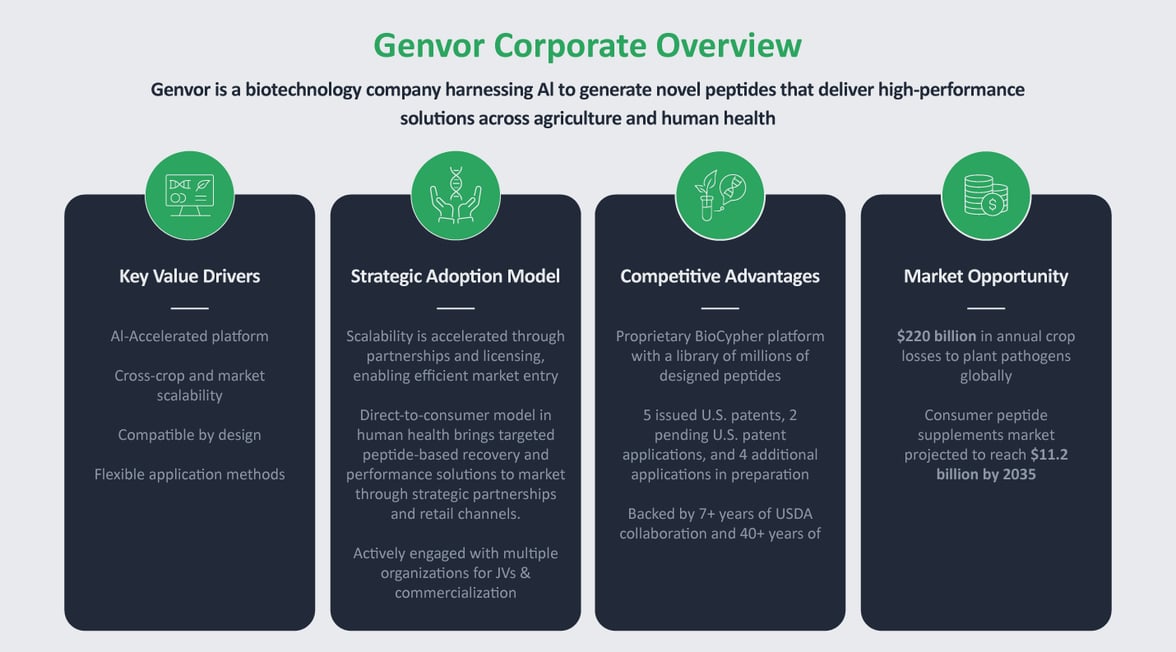
Genvor Incorporated (OTCQB: GNVR) is a biotechnology company that uses artificial intelligence to design peptides for applications in crop protection and human health and wellness. The Company's tagline, "Peptides by Design," reflects its core activity: using a proprietary AI platform called BioCypher to generate and screen peptide candidates that are intended to protect crops from disease, improve plant nutrition, and support human wellness. Genvor was incorporated in Nevada and trades on the OTCQB venture market.
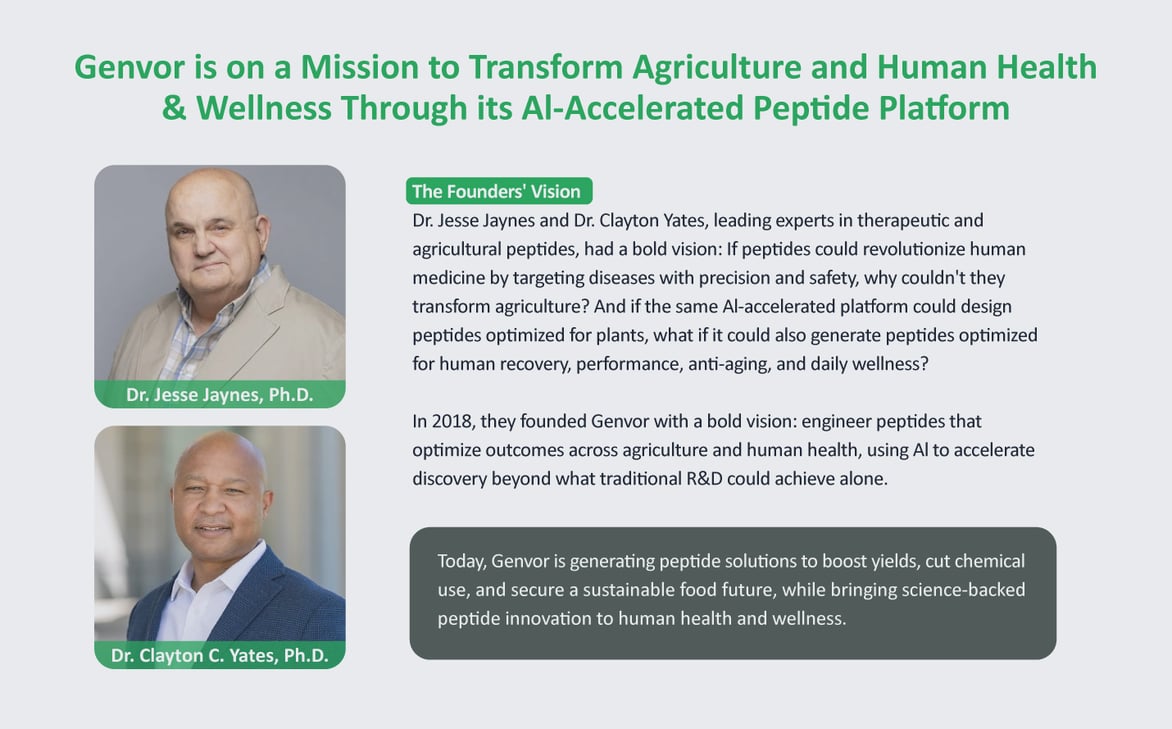
The Company was founded in 2018 by Dr. Jesse Jaynes and Dr. Clayton Yates, two university scientists with decades of experience in peptide research. Dr. Jaynes began his work in agricultural biotechnology during a postdoctoral fellowship at UC Davis in the late 1970s, where he studied under Dr. Raymond Valentine, a researcher whose early work on transgenic seeds contributed to the foundation of modern agricultural biotechnology. Over the following four decades, Dr. Jaynes developed techniques for synthesizing and modifying antimicrobial peptides (short protein fragments that can kill or inhibit pathogens). Dr. Yates brought complementary expertise in peptide applications for human medicine. Their shared premise was that the same peptide design principles that have advanced human therapeutics could be applied to agriculture, and human health and wellness.
 Source: Company Documents
Genvor's platform has produced a library of millions of AI-generated peptides, built on over 40 years of foundational peptide research. These peptides address biological crop protection, yield enhancement through improved stress tolerance, nutrient optimization, animal health applications in feed efficiency, and human health and wellness applications including recovery, performance, anti-aging, and daily wellness. The Company holds five issued U.S. patents, two pending U.S. patent applications, and four additional applications in preparation, with international filings in Canada, Mexico, and China.
Rather than manufacturing or distributing products itself, Genvor employs a licensing-first business model for its agricultural applications. The Company designs and validates peptides, then licenses the technology to seed companies, biochemical manufacturers, and other agricultural partners for integration into their own product lines. In parallel, Genvor has begun developing a direct-to-consumer channel for human health and wellness peptide products, which the Company views as a faster path to revenue given the less capital-intensive supplement regulatory pathway. The sections that follow examine the markets Genvor is addressing, the science and technology behind its approach, and the Company's commercial and financial progress to date.
 Source: Company Documents
The Agricultural Crisis
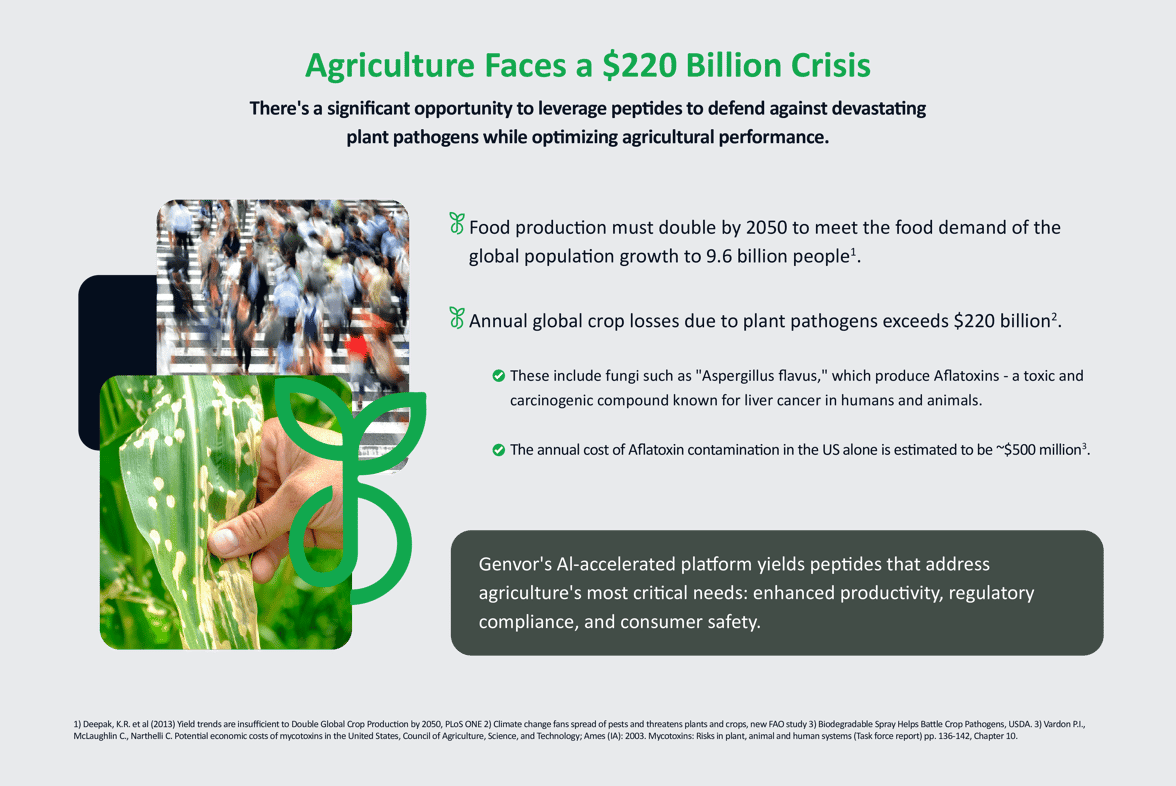
Global agriculture faces a persistent and growing problem: plant pathogens destroy an estimated $220 billion worth of crops every year, according to data cited by the Company from the Food and Agriculture Organization of the United Nations and related research. Fungi such as Aspergillus flavus, Fusarium graminearum, and Botrytis cinerea attack staple crops including corn, wheat, soybeans, rice, and cotton, reducing yields and, in some cases, contaminating harvests with toxins that pose direct risks to human and animal health. Aspergillus flavus is a particular concern because it produces aflatoxins, a class of carcinogenic compounds. The U.S. Department of Agriculture has imposed strict guidelines for aflatoxin inspection, and fields or harvested crops found to be contaminated above permitted levels must be destroyed, often at a total loss to the farmer. The Company estimates that aflatoxin contamination costs the U.S. corn industry between $52 million and $1.7 billion annually.
But aflatoxins represent only one front in a much broader war. Fusarium species, including F. graminearum, F. verticillioides, and F. oxysporum, cause devastating wilts, ear rots, and head blight across corn, cotton, and other major row crops, producing their own class of harmful mycotoxins (fumonisins and deoxynivalenol). Total annual U.S. losses from fungal diseases in corn alone are estimated between $3 billion and $5 billion when accounting for yield reductions and quality degradation across all major pathogens.
Food production will need to roughly double by 2050 to meet demand from a global population projected to reach 9.6 billion. At the same time, growers are running out of effective tools. Traditional chemical fungicides have been the primary method of crop protection for decades, but their long-term continuous use has led to increasing resistance among plant pathogens, a pattern that mirrors the antibiotic resistance problem in human medicine. Chemical residues also persist in soil, water, and harvested crops, raising environmental and food safety concerns. Regulators worldwide are tightening restrictions on synthetic pesticides, with the European Union applying stricter standards than the United States. Consumers are simultaneously demanding residue-free and organically produced food. These converging pressures have created a widening gap between the tools growers have and the tools they need.
 Source: Company Documents
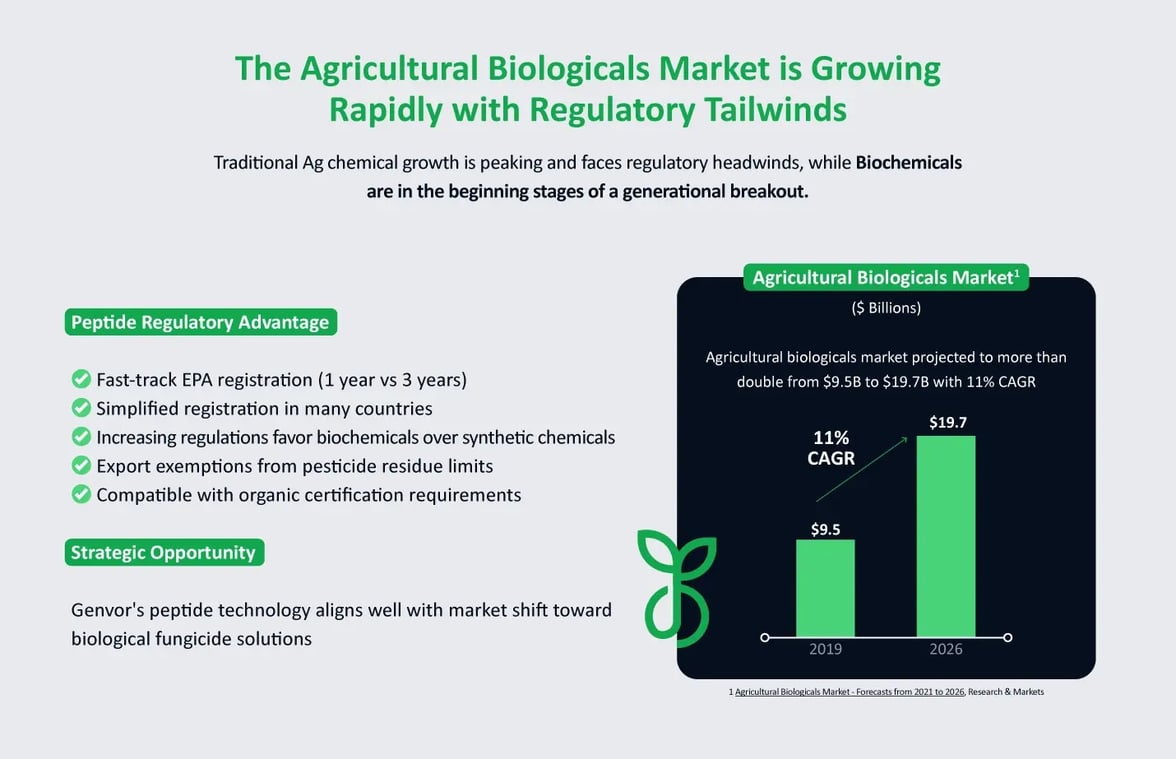
The agricultural biologicals market, which includes biological alternatives to synthetic pesticides, has been growing to fill that gap. According to Research & Markets, the global agricultural biologicals market was approximately $9.5 billion in 2021 and is projected to reach $19.7 billion by 2026, representing a compound annual growth rate of approximately 11 percent. Peptide-based crop protection products qualify for expedited regulatory pathways as biological products. In the United States, EPA registration timelines for biological pesticides are generally shorter than those for conventional synthetic chemistry. Peptide products are also exempt from pesticide residue limits on exported produce and are compatible with organic certification requirements, giving them access to both conventional and organic agricultural markets.
The biologicals industry itself has evolved through what can be described as three generations. The first generation consisted of botanical extracts, such as seaweed-based biostimulants and pyrethrin insecticides derived from chrysanthemums. The second brought live microbial products based on organisms like Bacillus, Trichoderma, and Bradyrhizobium. Peptides, proteins, and enzymes represent what many in the industry consider the third generation, with the potential to deliver biological solutions that approach or match the efficacy of synthetic chemistry while maintaining the environmental and regulatory profile of a biological product. Genvor's peptide technology is positioned within this third generation. The following section examines how peptides work and the AI platform that Genvor uses to design them.
 Source: Company Documents
How Peptides Work and the BioCypher Platform
Peptides are short-chain biomolecules, typically between 2 and 50 amino acids in length, linked by peptide bonds. They occur naturally in animals, plants, and microorganisms and play a wide variety of roles in biological systems, from antimicrobial defense to cell signaling and nutrient regulation. Both natural and synthetic peptides can be produced through chemical synthesis, biological fermentation, gene recombination, and other methods. What makes peptides attractive for agricultural and health applications is their specificity (they can be designed to target particular pathogens or biological pathways), their biodegradability (they break down naturally and do not persist in the environment), and their multiple modes of action (which reduce the risk of resistance development compared to single-mode chemical pesticides).
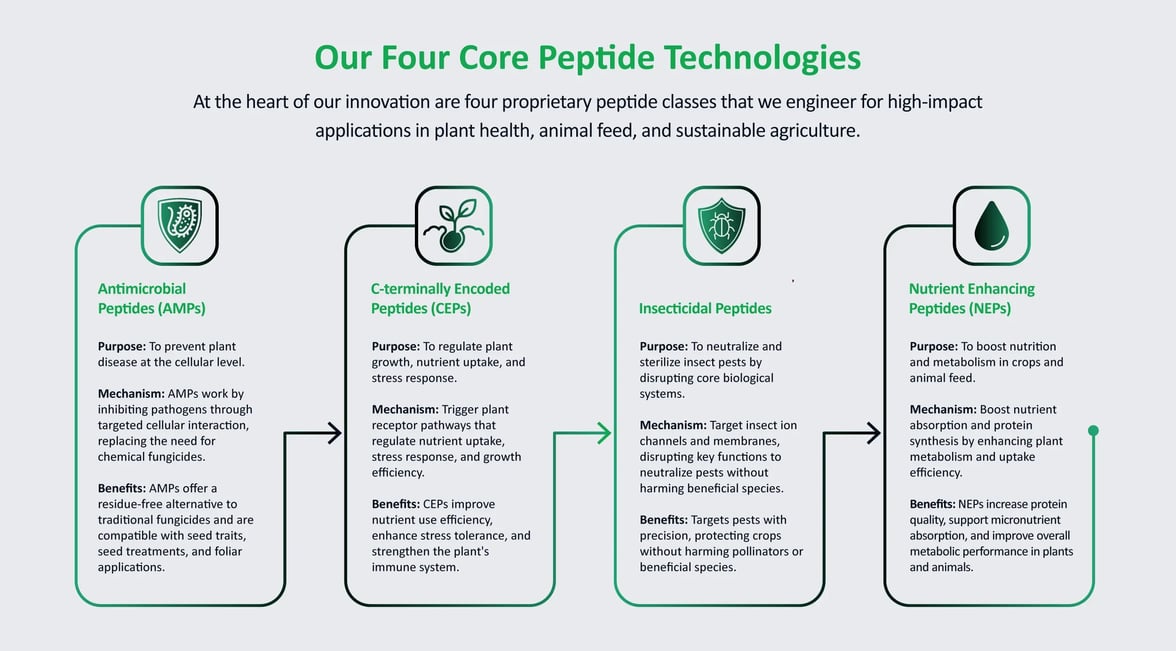
Genvor's peptide portfolio spans six distinct classes, each engineered for a different purpose across agriculture and human health. Antimicrobial Peptides (AMPs) are designed to prevent plant disease at the cellular level by inhibiting pathogens through targeted cellular interaction, replacing the need for chemical fungicides; in human health, AMPs support targeted delivery for immune support and recovery. C-terminally Encoded Peptides (CEPs) regulate plant growth, nutrient uptake, and stress response by triggering plant receptor pathways that govern nutrient use efficiency, stress tolerance, and growth; in human health, CEPs support metabolic optimization and cellular signaling. Insecticidal Peptides target insect ion channels and membranes, disrupting functions that harm crops while avoiding harm to pollinators and beneficial species. Nutrient-Enhancing Peptides (NEPs) are designed to boost nutrition and metabolism in crops and animal feed by enhancing protein synthesis, nutrient absorption, and metabolic performance; in human health, NEPs support enhanced nutrient absorption and protein synthesis for performance and recovery. Recovery and Performance Peptides (RPPs) are designed to accelerate post-exertion recovery, reduce inflammation, and support muscle repair by targeting cellular recovery pathways, with delivery via metered-dose nasal spray for rapid bioavailability. Wellness and Anti-Aging Peptides are designed to support daily wellness, cellular regeneration, and healthy aging by optimizing cellular signaling pathways for recovery and resilience, with multiple delivery formats under development.
 Source: Company Documents
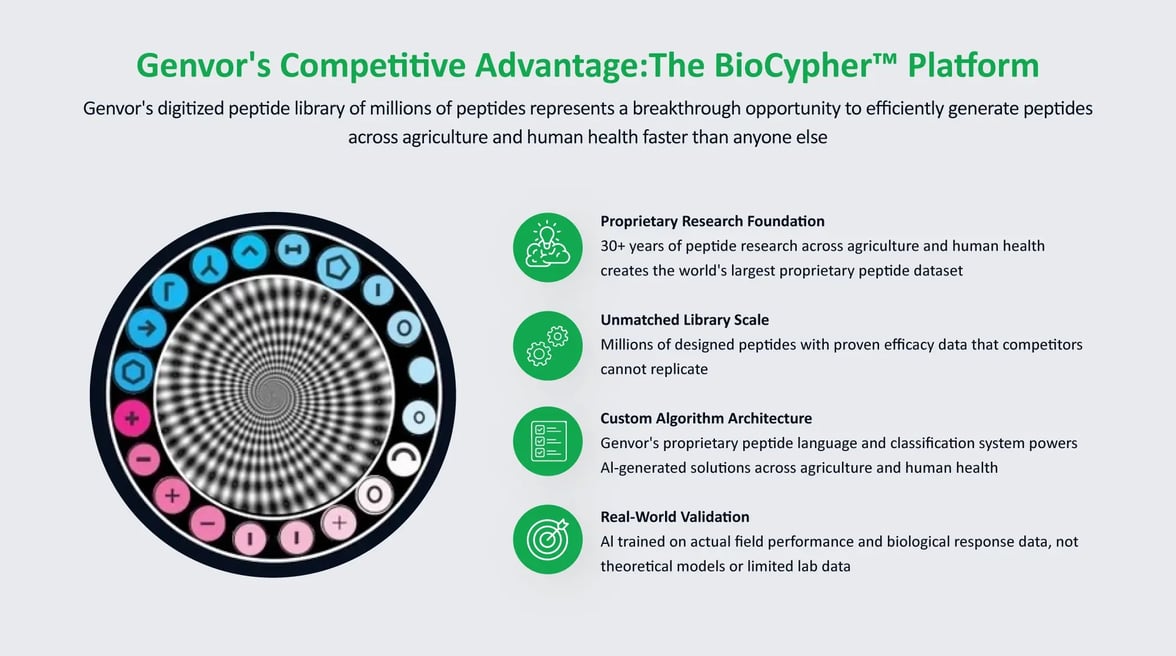
At the center of Genvor's discovery and design process is the BioCypher platform, the Company's proprietary AI engine. BioCypher combines computational biology with machine learning, integrating molecular modeling, predictive analytics, and regulatory benchmarks to generate and screen peptide candidates. The platform draws on a library of millions of AI-generated peptides, built from over 40 years of peptide research by the Company's co-founders, allowing the Company to narrow experimental testing to the most promising sequences. By training on actual field performance and biological response data rather than theoretical models alone, the BioCypher system is designed to generate candidates that are more likely to perform in real-world conditions.
 Source: Company Documents
Genvor delivers its agricultural peptides through four different modes, depending on the application and the needs of the end user. Biological fungicide sprays are topical or foliar formulations designed for greenhouse and specialty crops including berries, herbs, and vegetables. These qualify for generally shorter EPA registration timelines as biological products and are compatible with organic certification. Seed trait licensing involves encoding peptides directly into the seeds of large-scale row crops such as corn, soybeans, and cotton, providing long-term disease resistance from within the plant itself. Designer Bio-Stimulant Peptides (DBSPs) are applied to stimulate plant metabolism and nutrient uptake, improving soil health, water efficiency, stress resistance, and yield, making them ideal for regenerative, climate-smart farming. Human health and wellness delivery formats, including advanced nasal delivery for rapid bioavailability and other consumer-facing formats, are designed for the recovery, performance, anti-aging, and daily wellness markets. No prescription is required for these products, and they are positioned as OTC wellness products for distribution through direct-to-consumer channels and specialty retail.
 Source: Company Documents
Development Pipeline and Efficacy Data
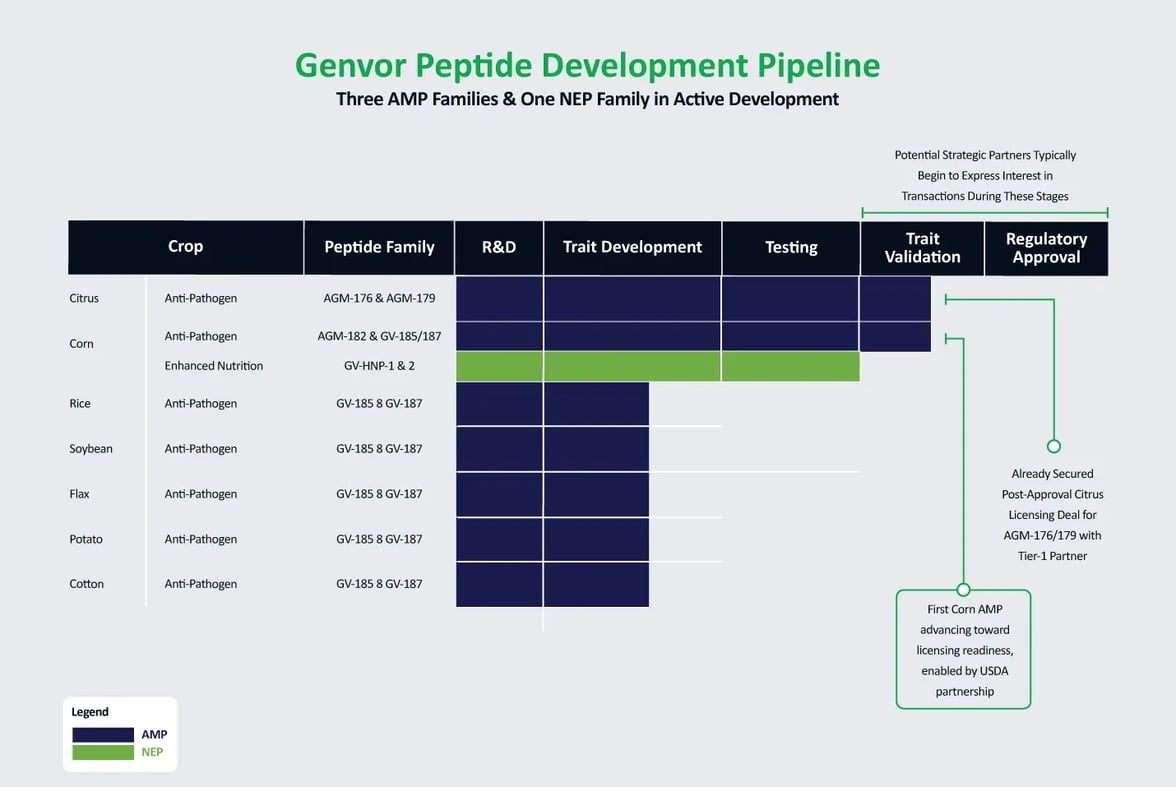
Genvor's development pipeline spans multiple crops and peptide families at various stages of advancement. On the agricultural side, the Company has active programs in citrus (using AMPs AGM-176 and AGM-179), corn (using AMPs AGM-182, GV-185, and GV-187 for anti-pathogen applications, and NEPs GV-HNP-1 and GV-HNP-2 for enhanced nutrition), rice, soybean, flax, potato, and cotton (all using the GV-185 and GV-187 AMP families for anti-pathogen applications). The corn AMP programs are the most advanced, with the Company noting that its first corn AMP is advancing toward licensing readiness, enabled by the USDA partnership. The Company has also secured a post-approval citrus licensing deal for peptides AGM-176 and AGM-179 with what it describes as a Tier-1 partner. Research is currently active in multiple labs in the United States, in Europe, and in two labs in Brazil.
 Source: Company Documents
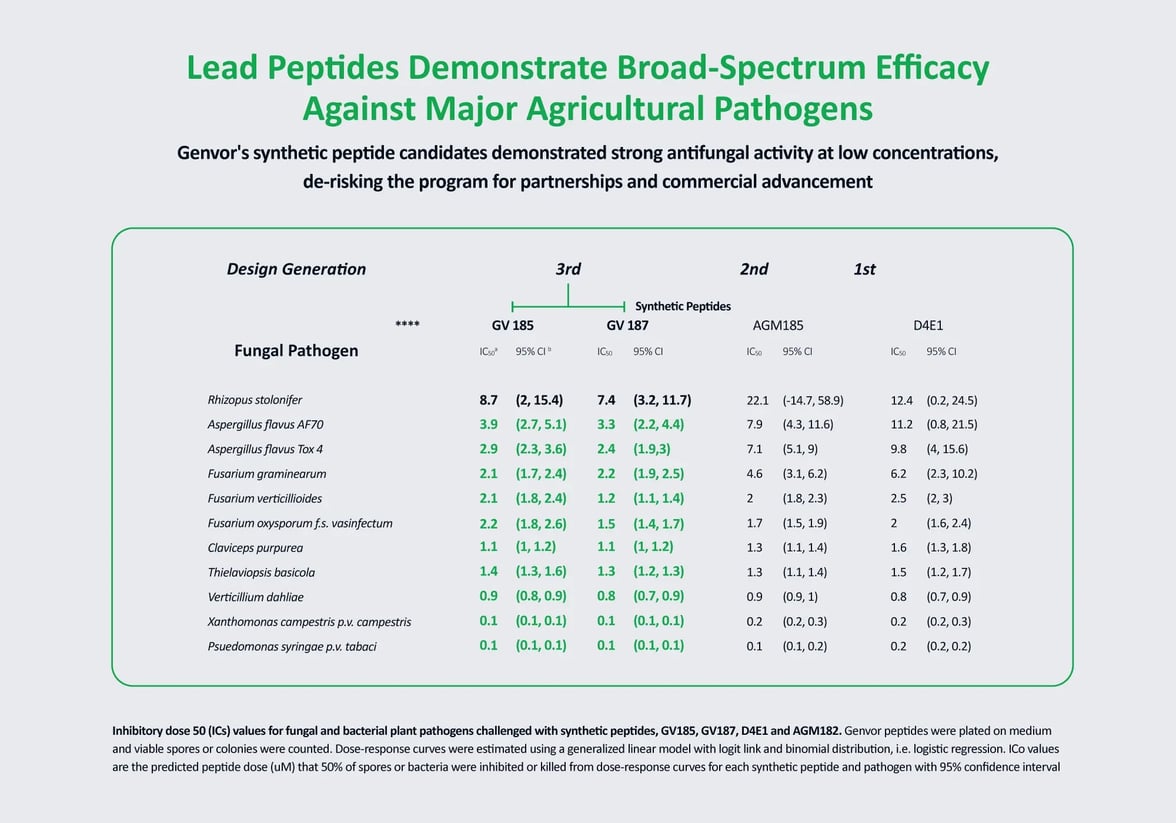
Laboratory testing of Genvor's lead peptide candidates has produced data across a range of agricultural pathogens. In broad-spectrum laboratory screening, the Company's synthetic peptides GV185 and GV187 demonstrated antifungal and antibacterial activity at low concentrations against pathogens including Rhizopus stolonifer, Aspergillus flavus, Fusarium graminearum, Botrytis cinerea, and several others. GV185 demonstrated activity against Aspergillus flavus AF70 with an IC50 (the concentration at which 50 percent of spores were inhibited or killed) of 3.9 micromolar, while GV187 showed an IC50 of 3.3 micromolar against the same pathogen. Against Fusarium graminearum, GV185 showed an IC50 of 2.1 and GV187 showed 2.2 micromolar. Both lead peptides also showed activity against bacterial plant pathogens including Xanthomonas campestris and Pseudomonas syringae at IC50 values of 0.1 micromolar. Concentration-response studies on several fungal pathogens demonstrated concentration-dependent growth inhibition, with GV185 showing efficacy at lower application rates in several comparisons.
 Source: Company Documents
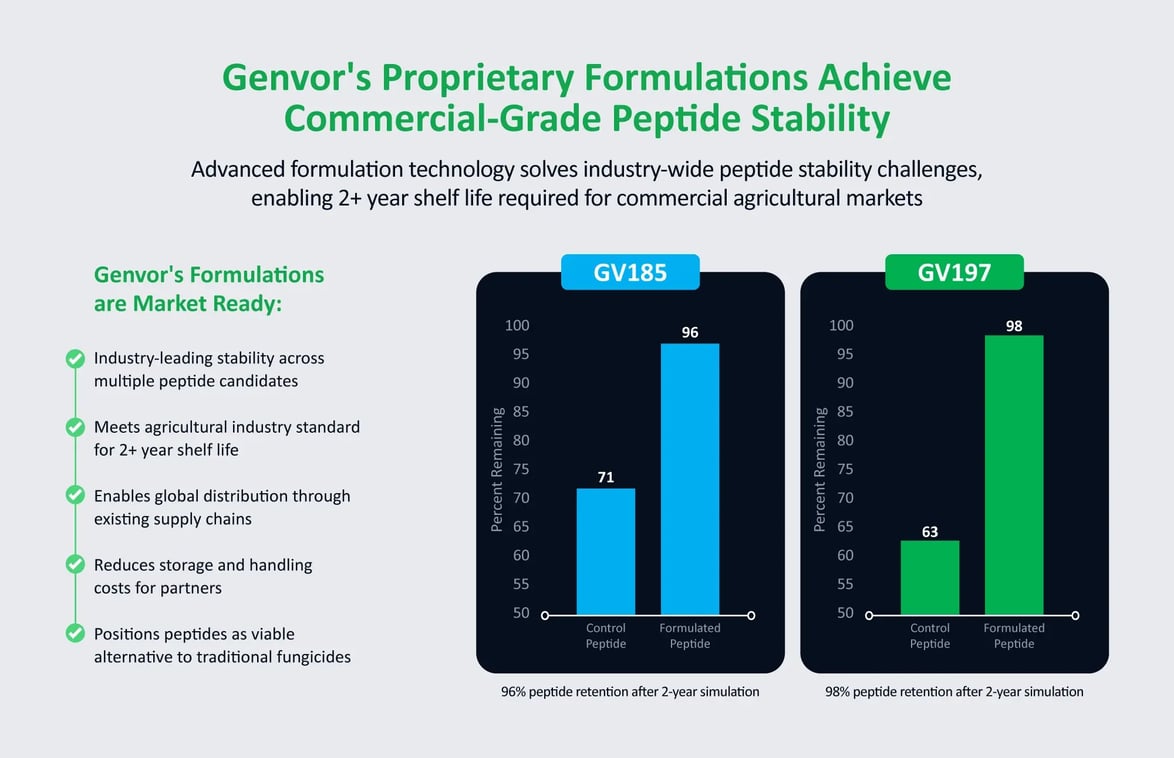
Beyond efficacy, the Company has made progress on formulation stability, which has historically been a challenge for peptide-based agricultural products. Peptides can degrade over time, especially under heat and other storage conditions, which limits their practical commercial use. Working with a specialty chemicals partner, Genvor developed and validated liquid aqueous formulations for its GV185 and GV197 antimicrobial peptides for foliar application across multiple crops including corn, wheat, and greenhouse tomatoes and strawberries. In accelerated aging studies simulating two years of storage, the formulated GV185 peptide retained 96 percent of its activity, compared to 71 percent for the unformulated control peptide. The formulated GV197 peptide retained 98 percent, compared to 63 percent for its control. These retention rates meet the agricultural industry standard for two-plus-year shelf life, which is a commercial requirement for integration into existing agricultural supply chains. The Company has also identified four contract manufacturers capable of producing its peptides at cost-of-goods levels acceptable for grower-level pricing.
 Source: Company Documents
The Company's transgenic corn peptide AGM182, developed in collaboration with the USDA, has been tested over a period spanning from 2018 to 2023, with results published by the USDA. Those studies showed a 76 to 98 percent reduction in total aflatoxin contamination in USDA research, with no adverse effects on plant growth or yield and a proven mammalian safety profile. This data provided the foundation for the Company's ongoing USDA Cooperative Research and Development Agreement (CRADA). With its agricultural pipeline established, the Company is also pursuing a parallel opportunity in human health and wellness, described in the following section.
The Human Health and Wellness Opportunity
In addition to its agricultural applications, Genvor is developing peptide-based products for the human health and wellness market. The same AI-driven design process that generates agricultural peptide candidates can also produce candidates optimized for human bioavailability, recovery, performance, anti-aging, and daily wellness. This expansion reflects the Company's view that peptide design principles are transferable across sectors, and that its existing platform and library can serve both markets without requiring separate R&D infrastructure.
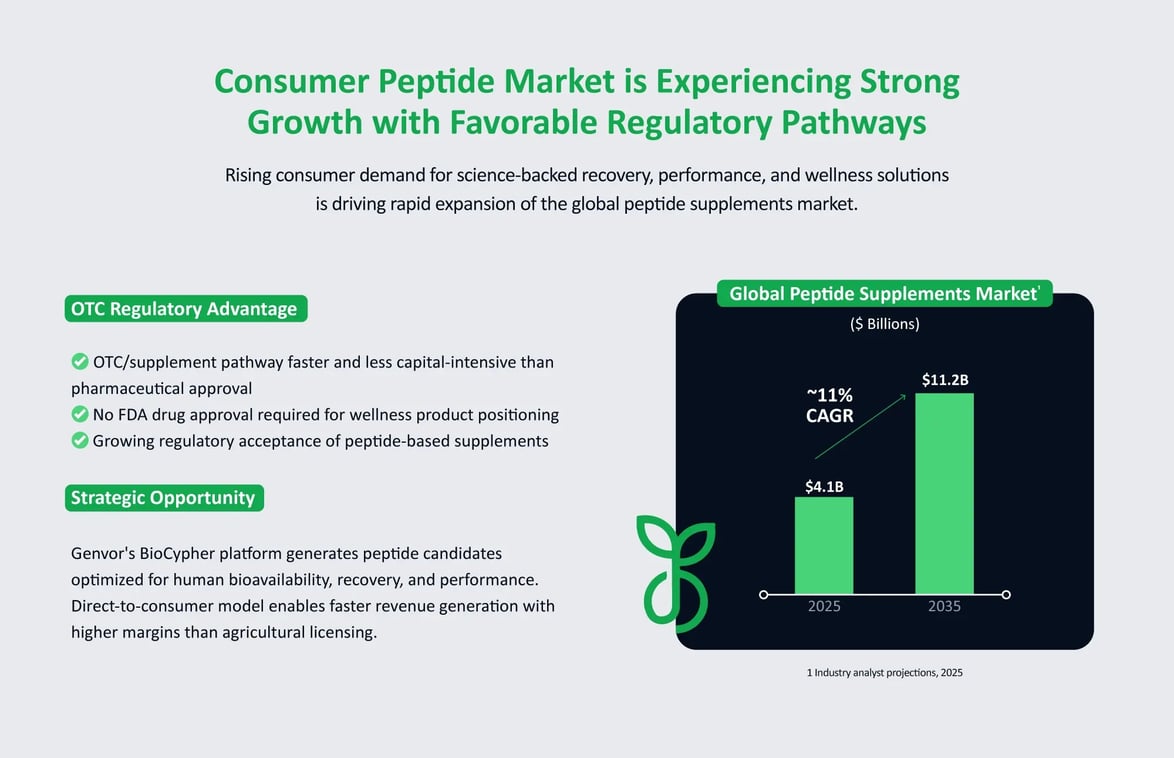
The global peptide supplements market was valued at approximately $4.1 billion in 2025, according to industry analyst projections cited by the Company. That market is projected to grow to approximately $11.2 billion by 2035, representing a compound annual growth rate of roughly 11 percent. Consumer demand for science-backed recovery, performance, and wellness products has been growing, and peptide-based supplements have gained visibility as a category within the broader sports nutrition and wellness market.
 Source: Company Documents
The regulatory pathway for consumer wellness products differs from agricultural applications. Peptide supplements marketed for general wellness purposes may be marketed through supplement-style regulatory pathways under the Dietary Supplement Health and Education Act (DSHEA), depending on formulation and claims, which is faster and less capital-intensive than pharmaceutical drug approval. The Company views this as an opportunity to generate revenue more quickly through direct-to-consumer and specialty retail distribution channels. Genvor's approach involves strategic wellness partnerships with credentialed leaders who bring market access, credibility, and deep recovery expertise to the products.
The Company views this dual-market positioning as a way to create multiple revenue pathways from a single technology core, with agriculture addressed through licensing and human health through DTC channels.
Partnerships and Third-Party Validation
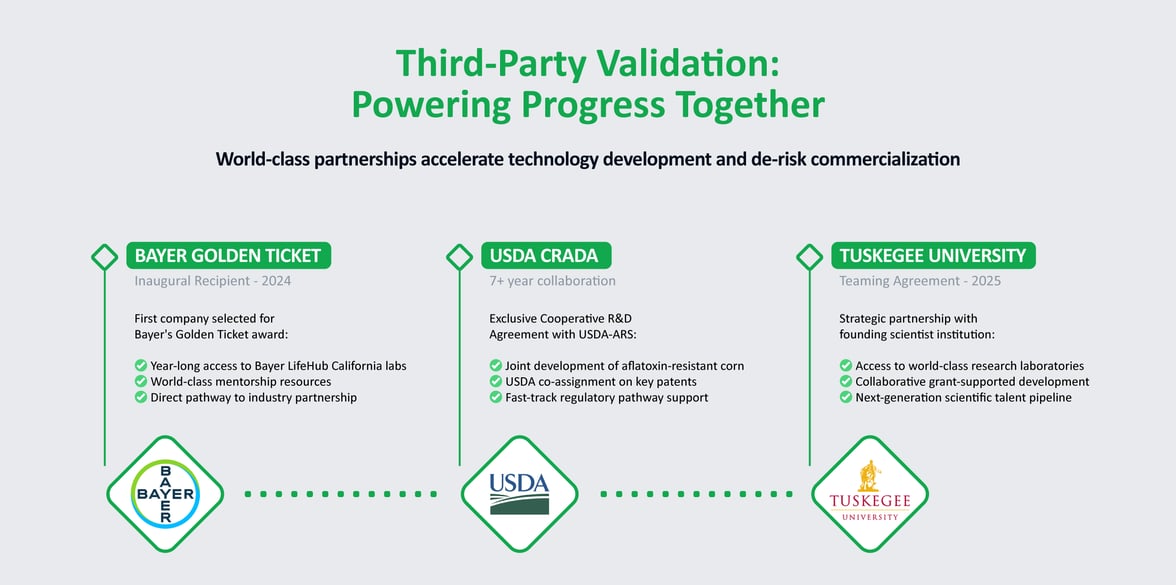
Genvor's technology development has been supported by three institutional partnerships that provide research infrastructure and a pathway toward commercialization. These relationships allow the Company to operate with minimal internal overhead while accessing facilities, expertise, and regulatory support that would otherwise require substantial capital investment.
The longest-standing partnership is with the United States Department of Agriculture (USDA). Genvor was awarded a Cooperative Research and Development Agreement (CRADA) with the USDA Agricultural Research Service in 2018 for the joint development of aflatoxin-resistant corn using Genvor's antimicrobial peptide technology. A CRADA is a formal agreement that gives a company access to USDA laboratories, scientists, greenhouses, field trial sites, and the USDA's regulatory team for registrations and processes. For context, it often takes eight years and $136 million to develop and bring a new seed trait through regulatory to the marketplace through conventional channels. The USDA collaboration has produced co-assigned patents, including U.S. Patent No. 12,458,684 for transgenic corn expressing the antifungal peptide AGM182. The CRADA has been active for over seven years, and Genvor expects to apply for an extension to continue studies of its fourth-generation peptides (GNV-185 and GNV-187) toward commercialization.
 Source: Company Documents
In 2024, Genvor was selected by Bayer AG as the inaugural recipient of its Golden Ticket award, a competitive innovation initiative designed to support high-impact agricultural technologies. Nearly 40 companies applied. The award provides access to Bayer's LifeHub California facilities and mentorship resources at AgStart, an AgriFoodTech innovation center located approximately two miles from Genvor's own Woodland, California laboratory. The Company's Woodland lab is a fully equipped wet-lab environment where its senior scientist, Dr. Brianna Fochs, oversees research operations, assay development, and experimental validation. Current lab work includes formulation and protease interaction studies (protease is a plant enzyme that can break down incoming peptides before they reach their target).
In 2025, Genvor entered into a formal teaming agreement with Tuskegee University, providing access to the university's research laboratories, greenhouse facilities, field trial sites, and scientific talent. The Tuskegee partnership is focused on R&D rather than direct commercialization, opening opportunities for collaborative grant-supported development and next-generation peptide research. Together, these three relationships provide Genvor with external research infrastructure and institutional credibility while allowing the Company to advance its technology without building and funding its own large-scale facilities. The following section describes how Genvor plans to commercialize the peptides that emerge from this work.
Business Model and Intellectual Property
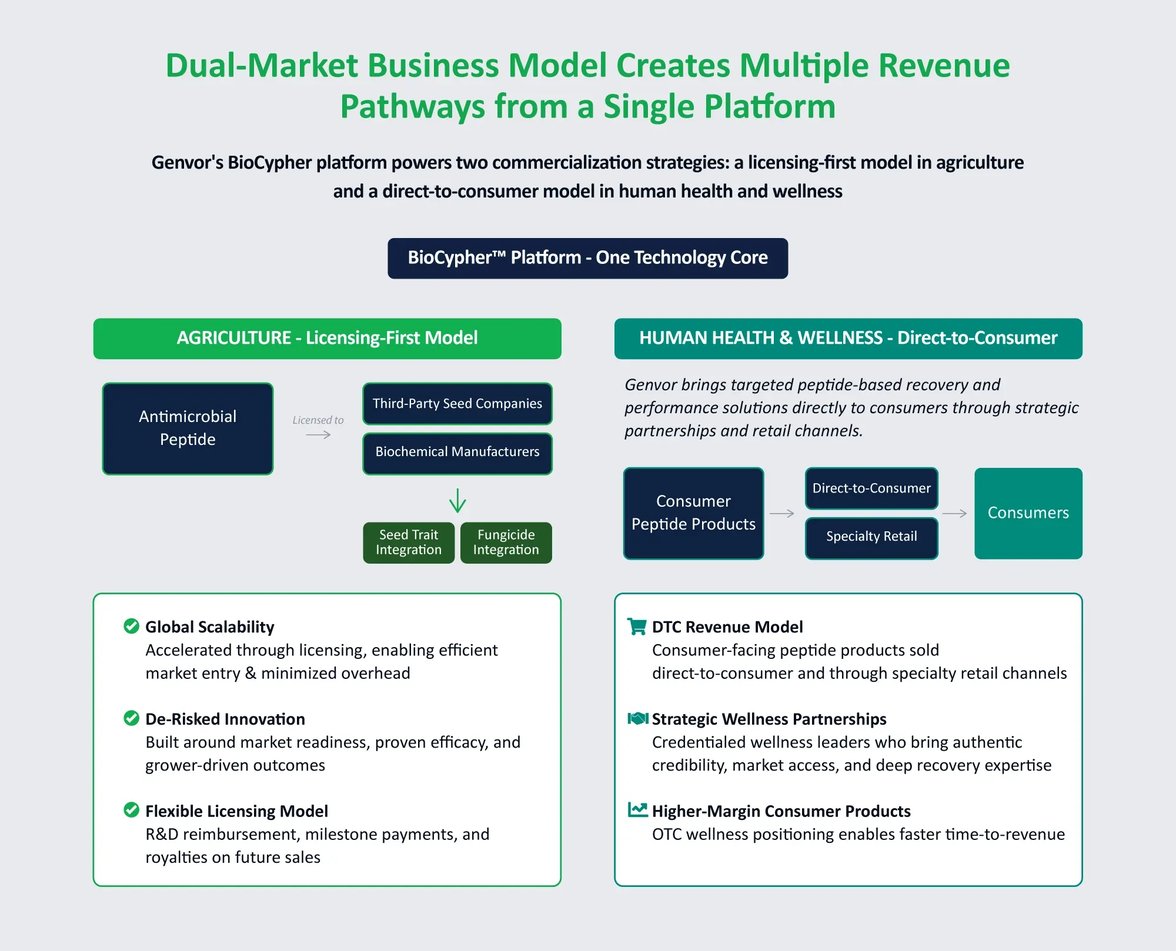
Genvor's commercial strategy operates on two tracks. For agriculture, the Company follows a licensing-first model: it designs and validates peptides, then licenses the technology to seed companies, biochemical manufacturers, and crop protection distributors. Revenue from agriculture includes R&D reimbursement during development, milestone payments tied to regulatory and commercial benchmarks, and royalties on future product sales. This approach keeps the Company capital-light and leverages partners' existing regulatory expertise, manufacturing infrastructure, and distribution networks. Genvor is currently engaged in material transfer agreements (MTAs) and joint development agreements (JDAs) with multiple organizations it has described as agricultural industry majors.
 Source: Company Documents
For human health and wellness, Genvor is pursuing a direct-to-consumer (DTC) model, with products sold directly to end users and through specialty retail channels. The Company plans to build this business through strategic wellness partnerships with credentialed leaders who bring market access and expertise in recovery and performance. The supplement-style wellness positioning offers a faster path to revenue than agricultural licensing, because the products can move from formulation to market under DSHEA with less time and capital than pharmaceutical or agricultural regulatory pathways require.
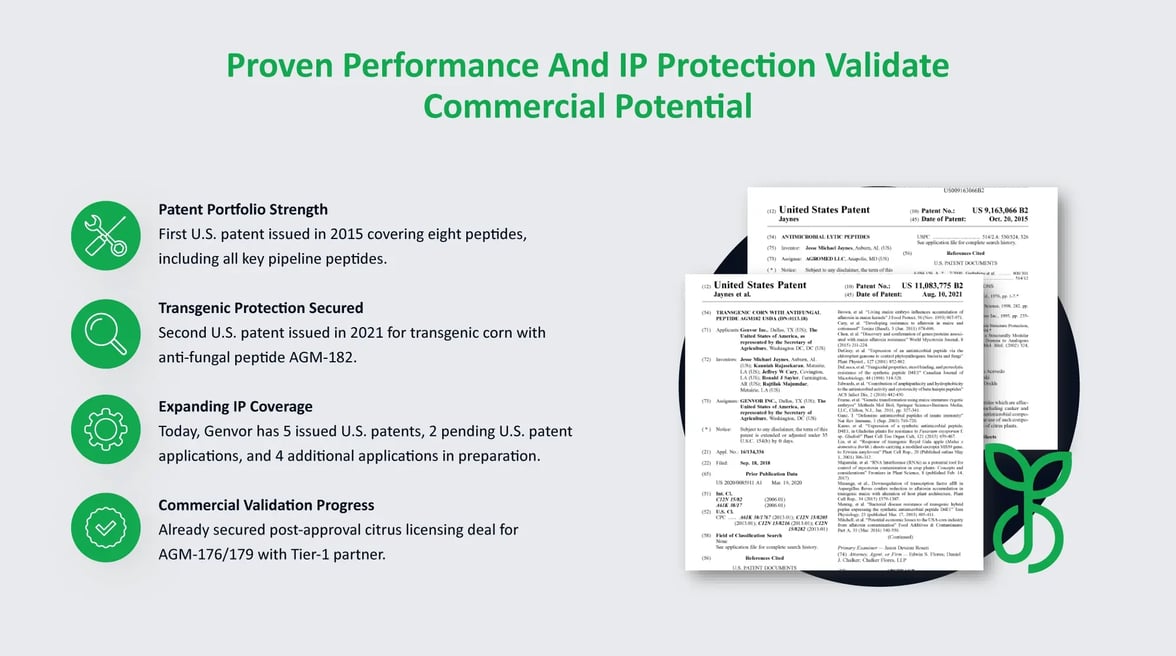
The Company's intellectual property portfolio underpins both commercial tracks. Genvor holds five issued U.S. patents covering antimicrobial and nutrient-enhancing peptides, two pending U.S. patent applications, and four additional applications in preparation. International patent applications have been filed in Canada, Mexico, and China. U.S. patent protection extends from 2031 to 2038. The first patent was issued in 2015, covering eight peptides including all current pipeline candidates. A second was issued in 2021 for transgenic corn with antifungal peptide AGM-182, co-assigned with the USDA. The Company has obtained registered trademarks for GENVOR PEPTIDES BY DESIGN®.
 Source: Company Documents
Genvor operates in a competitive landscape that includes both traditional chemical pesticide manufacturers and other biological solution providers working with peptides. Vestaron Corporation offers EPA-registered peptide-derived insecticides (Spear® T and Spear® RC) in partnership with ADM. BASF has incorporated peptide-enhanced crop protection into its global portfolio, including the Inscalis® product for rice blight. Syngenta is advancing peptides through its fungal disease control pipeline, and Micropep Technologies, a France-based company, has raised over $51 million to develop its Krisalix AI-powered micropeptide platform. Genvor differentiates itself through the scale of its proprietary peptide library of millions of AI-generated peptides backed by 40-plus years of foundational research), its USDA co-assigned patents, and the breadth of its platform across six peptide classes, multiple delivery modes, and dual-market applicability across agriculture and human health.
On the commercial front, Genvor has already secured a post-approval citrus licensing deal for its AGM-176 and AGM-179 peptides with a Tier-1 partner, indicating that at least one agricultural partner has committed to a commercial relationship contingent on regulatory clearance. The Company's overall approach is to let its science, IP, and institutional partnerships attract partners rather than building internal commercial infrastructure, which keeps overhead low and capital requirements manageable.
Financial Overview
Genvor is a pre-revenue company. As of December 31, 2025, the Company's most recent quarterly reporting date, cash on hand was $103,580. Total assets were $145,739 and total current liabilities were $1,205,059. The Company has funded its operations primarily through the sale of common stock and, to a lesser extent, through advances from related parties. During the three months ended December 31, 2025, the Company raised $260,000 through the sale of 520,000 shares of common stock at $0.50 per share.
The Company's operating expenses for the three months ended December 31, 2025 totaled $562,655. Research and development expenses were $57,147, advertising and marketing expenses were $6,442, professional fees were $191,182, compensation and related benefits were $272,985, and other general and administrative expenses were $34,899. Total operating expenses declined substantially compared to the same quarter in the prior year, when they were $4,997,414, largely because the prior-year period included approximately $4.9 million in stock-based compensation and related benefits. Cash used in operating activities for the three months ended December 31, 2025 was $193,651.
Genvor operates with a small team. As of September 30, 2025, the Company had two full-time employees and two scientific employee advisors, along with a fractional chief marketing officer and a contracted controller. Its headquarters in Henderson, Nevada is a virtual facility, and its only physical space is the R&D laboratory in Woodland, California, part of the AgStart life-science innovation center, available through a Bayer-supported lease extending through July 2026.
Management believes that the actions presently being taken to implement its business plan, develop its products and technologies, and generate revenues should provide the opportunity for the Company to continue as a going concern. The Company intends to raise additional capital through public and private stock offerings to fund ongoing operations, R&D activities, contributions under the USDA CRADA, and regulatory and commercialization efforts. The Company also has an open Regulation D (506C) offering for accredited investors. As of December 31, 2025, 34,430,605 shares of common stock were issued and outstanding. The Company's share structure also includes Series A Preferred Stock (6 shares outstanding, each carrying 10 million votes) and Series B Preferred Stock (1,910,536 shares issued, each convertible into 10 shares of common stock).
Near-term milestones include the continuation and expected extension of the USDA CRADA for fourth-generation peptide development, the advancement of the corn AMP program toward licensing readiness, completion of ongoing stability studies and selection of final lead prototypes for greenhouse and field trial evaluation, the buildout of the human health DTC product line through strategic wellness partnerships, and the continued evaluation of contract manufacturing partners for commercial-scale peptide production. The Company does not expect to generate revenue from agricultural licensing until field trials and regulatory approvals are further advanced, though the supplement wellness channel may offer a faster path to initial revenue.
Leadership Team
Chad Pawlak, Sr., MBA serves as Genvor's Chief Executive Officer. Mr. Pawlak was appointed CEO on January 17, 2024. He brings over a decade of experience in the agricultural biologicals industry, where he has worked on the development and commercialization of biological crop protection and crop nutrition products. Prior to joining Genvor, Mr. Pawlak held leadership positions in biological agriculture companies, with experience in fundraising, business development, national sales operations, and building partnerships with agricultural distributors and manufacturers.
Dr. Jesse Jaynes, Ph.D. is the Company's Co-Founder, Chairman of the Board, and Director of Scientific Research and Development. Dr. Jaynes has spent over four decades developing techniques for synthesizing, modifying, and testing antimicrobial peptides across agriculture, human therapeutics, and other fields. He began this work during a postdoctoral fellowship at UC Davis in the late 1970s and has since authored numerous white papers and patents relating to peptide design and application. His peptide research forms the foundation of the BioCypher platform's proprietary training dataset, and his work with the USDA has produced co-assigned patents covering Genvor's transgenic corn peptide technology.
Dr. Clayton C. Yates, Ph.D. is the Company's Co-Founder and serves as Scientific Advisor. Dr. Yates brought expertise in peptide applications for human medicine to the Company's founding, complementing Dr. Jaynes' agricultural focus. Together, the co-founders' vision was to apply AI-accelerated peptide design to both agriculture and human health. Dr. Yates continues to advise on the Company's scientific direction and human health peptide development.
 Source: Company Documents
Dr. George Stavrides, Ph.D. serves as Executive Vice President of Business Development and Commercialization. Dr. Brianna Fochs, Ph.D. is the Company's Senior Scientist and Lab Manager, overseeing research operations, assay development, and experimental validation at the Woodland, California laboratory. Dr. Lance Culnane, Ph.D. serves as Director of AI and Machine Learning, supporting the ongoing development and refinement of the BioCypher platform. Carly Scaduto serves as Director of Corporate Communications, and Adrienne Anderson serves as the Company's Controller, managing financial reporting and accounting operations.
This communication is neither an offer to sell nor a solicitation of an offer to buy, nor a recommendation of any securities of the company mentioned herein.
Genvor Incorporated (the "Company") and its counsel have reviewed the content of this page as well as the accompanying presentation ("Company Presentation") displayed on this page. To the best of its knowledge, the Company does not believe this content to be misleading or inaccurate in any material respect, nor does it believe there are any material omissions with respect to such content. The Company does not believe the contents of the page or the Company Presentation to contain any non-public material information.
Information and opinions presented in the Company Presentation are provided by the Company, and B2i Digital makes no representation as to their accuracy or completeness. The information contained on this page is not intended to constitute any form of advice, and the information provided is not intended to provide a sufficient basis on which to make an investment decision. It is not investment research, nor does it constitute a research recommendation, as it does not constitute substantive research or analysis. This information is not to be relied upon in substitution for the exercise of independent judgment.
Information, opinions and estimates contained on this page or in the Company Presentation reflect judgments by the Company as of the original date of publication by the Company and are subject to change without notice. Past performance should not be taken as an indication or guarantee of future performance, and no representation or warranty, express or implied is made regarding future performance.
A complete description of the risks and uncertainties relating to the Company and its securities can be found in the company's filings with the U.S. Securities and Exchange Commission available for free at www.sec.gov.
Information on this page may relate to penny stocks, which may also be referred to as low-priced stocks. Penny stocks are low-priced shares typically issued by small companies. Penny stocks involve greater than normal risk, they may be less liquid than other stocks (i.e., more difficult to sell), and there may be less reliable information available regarding such stocks. Investors in penny stocks should be prepared for the possibility that they may lose their entire investment.
B2i Digital or its related entities may own securities of the Company.
To comply with Rule 17(b) of the Securities Act of 1933, as amended, B2i Digital must provide full disclosure of all compensation received for investor awareness services provided by the Company.
The Company is a client of B2i Digital. The Company agreed to pay B2i Digital no greater than $100,000 in cash for 12 months of digital marketing consulting and investor awareness services.
-
Click to view Proxy Design & Production ServicesProxy Design & Production Services
-
Click to view Investor Relations & Press DistributionInvestor Relations & Press Distribution
-
Click to view SEC EDGAR FilingsSEC EDGAR Filings
-
Click to view Financial Printing ServicesFinancial Printing Services
-
Click to view Virtual Data Room Services (VDRs)Virtual Data Room Services (VDRs)
-
Click to view iXBRL FilingsiXBRL Filings
-
Click to view Mailing Services & Document Management SolutionsMailing Services & Document Management Solutions
Proxy Design & Production Services
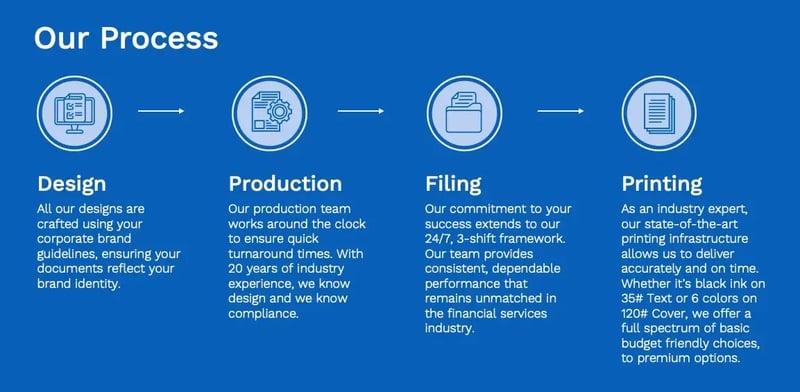
The Nuvo Group’s Proxy Design & Production Services help companies streamline the proxy process by delivering professionally designed, accurate, and easy-to-navigate documents that align with corporate goals and boost shareholder participation.
• 24/7 Production team ensures rapid turnaround times with decades of industry expertise.
• End-to-end support manages the entire process from initial design through filing and printing.
• Comprehensive printing offers solutions ranging from simple black ink to premium custom finishes.
• Brand consistency maintains corporate identity standards across all communication materials.
Investor Relations & Press Distribution
NUVOIR services by The Nuvo Group combine compelling messaging with targeted engagement strategies to help organizations reach the right audience and attract new investors. These services deliver tangible results and measurable returns on investment (ROI) for private companies, public companies, and agencies.
• Data-driven strategies combine industry expertise with analytics to create standout messaging.
• Global distribution press releases reach targeted media outlets, journalists, and analysts.
• Engagement tools include webcast services, IR feeds, real-time alerts, and website hosting.
• Flat-fee pricing helps clients maintain cost controls, manage costs predictably, and stay within budget.

SEC EDGAR Filings
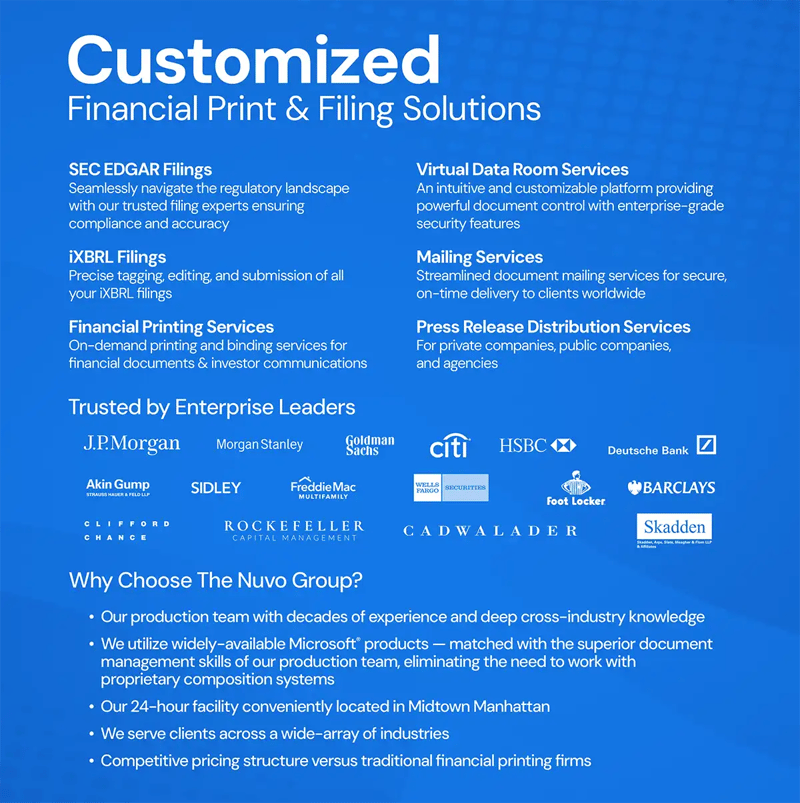
When it comes to SEC EDGAR filings, precision, compliance, and timeliness are non-negotiable. The Nuvo Group ensures that every financial filing meets the highest standards, covering mutual funds, proxy statements, annual reports, prospectuses, and key forms such as 10-Q, 10-K, 8-K, 6-K, 11-K, S-1, DEFM14A, and DEFM14C.
• Compliance excellence with meticulous quality reviews ensures all technical requirements are met.
• Software compatibility, working with clients' platforms, eliminates formatting errors.
• 24/7 Availability and around-the-clock support ensure every deadline is met.
• Our expert team of industry veterans helps clients navigate complex filing requirements.

Financial Printing Services
The Nuvo Group offers comprehensive printing solutions for all essential financial documents, including annual reports, proxy statements, offering memorandums, and investor communications.
• Diverse print options run the gamut from black-and-white reports to premium multi-color finishes.
• Advanced production is done with state-of-the-art offset and digital printing capabilities.
• 24/7 Service ensures on-time delivery for time-sensitive projects.
• Custom binding offers multiple finishing options including spiral, coil, and hardcover formats.
Virtual Data Room Services (VDRs)
The Nuvo Group's Virtual Data Room Services (VDRs) provide secure, intuitive platforms for managing sensitive documents during mergers, acquisitions, and capital raises.
• Intuitive interface enables quick document uploads and organization with minimal user training required.
• Document control allows customized access levels and permissions for viewing, downloading, or editing files.
• Security protocols incorporate encryption, multi-factor authentication, and comprehensive activity tracking.
• 24/7 Availability ensures seamless collaboration across time zones during critical transactions.

iXBRL Filings
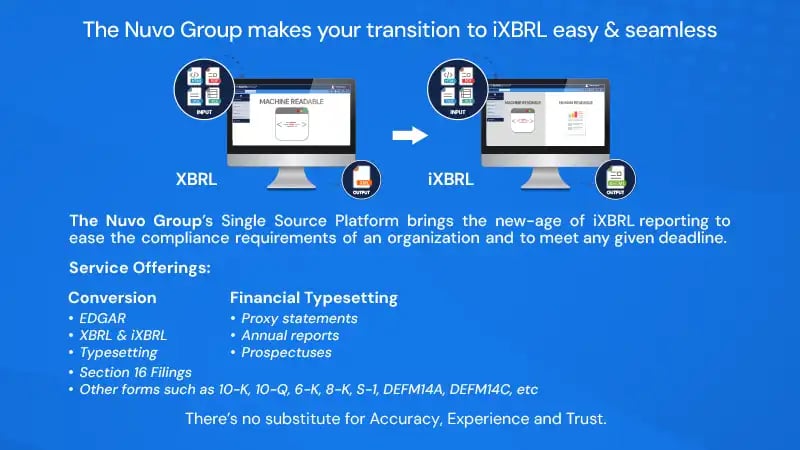
The Nuvo Group provides inline eXtensible Business Reporting Language (iXBRL) tagging and submission services, ensuring financial statements comply with SEC requirements while meeting critical deadlines.
• Quality assurance maintains precise tagging and alignment with SEC taxonomies through rigorous review processes.
• System integration works within clients' existing financial platforms to maintain formatting consistency.
• Real-time updates enable immediate corrections and adjustments throughout the submission process.
• Expert solutions handle complex financial data across annual reports, proxy statements, and mutual fund filings.
Mailing Services & Document Management Solutions
The Nuvo Group streamlines the delivery of financial communications through comprehensive mailing and document management solutions, from annual reports to shareholder notices.
• Complete mailing handles everything from binding and inserting to domestic and international delivery.
• Secure management provides encrypted portals for document uploads and processing.
• Status tracking offers real-time updates and reporting throughout the delivery process.
• Flexible options accommodate both large-volume mailings and specialized communications.
Read the full announcement: https://lnkd.in/dvDpMYsg
#Biotechnology #Leadership #CFO #AgTech #HealthAndWellness #PeptidesByDesign #GNVR
In this presentation, Chad discusses:
🌱 The $220 billion global crop loss crisis and how Genvor’s peptides are designed to address it
🔬 Our proprietary BioCypher Algorithm, built on decades of research and 50,000+ designed peptides
🤝 Third-party validation including our 7+ year USDA collaboration, Bayer Golden Ticket recognition, and Tuskegee University partnership
📈 Our licensing-first business model and pipeline progress across row and specialty crops
Watch the full presentation: https://lnkd.in/g-BCNw7K
#AgTech #SustainableAgriculture #Biotech #InvestorRelations #Peptides #PeptidesByDesign
His expertise in building strategic partnerships and bringing biological technologies to market will accelerate Genvor’s commercialization efforts.
Welcome to the team, George!
Read the full announcement: https://lnkd.in/gvKR-Km7
#AgTech #SustainableAgriculture #Biologicals #Leadership #CropProtection #GNVR
To read more on the quarter, please click here: https://lnkd.in/gBN9bHiV
$GNVR #agtech #esg #sustainability #agriculture

Genvor is a B2i Digital Featured Company (https://b2idigital.com/genvor-incorporated-1) that designs and licenses proprietary peptide sequences for agriculture and human health. For more information, visit https://www.genvor.com and follow Genvor on LinkedIn.
"This morning we had a press release that went out and we signed our first MOU on a commercial pathway for five peptides with a company called CanLabs. They've come to us and said, we want you to design up to 20 sequences that will be unique to us in this MedSpa physician space," Pawlak announced, marking Genvor's first commercial licensing deal.
The economics and structure of the Canlab International MOU and the Platform Licensing Model arrangement:
• The financial structure is $1 million per sequence or 11% royalty on net sales, whichever is higher on an annualized basis, for CanLabs to maintain exclusivity on each sequence.
• Initial scope covers five sequences with a path to 20, representing a potential annual sequencing opportunity of up to $20 million annual sequencing opportunity before royalties on product sales.
• The MedSpa and physician channel is a commercially active market today, which allows Genvor to generate revenue while the agricultural business continues to develop through longer regulatory and commercialization cycles.
• The deal validates the platform’s commercial flexibility: in agriculture, Genvor’s licensing-first model puts validated peptide technology into the hands of Tier-1 partners, while in human health and wellness, the same platform supports both licensing arrangements like Canlab International and direct-to-consumer programs in development.
Watch the full presentation, courtesy of Centri Business Consulting: https://youtu.be/BSYxwOnxZmM
Genvor is led by Chief Executive Officer Chad Pawlak, Sr., with co-founders Dr. Jesse Jaynes and Dr. Clayton Yates, whose peptide sequence design work dates back to the 1970s. George Stavrides serves as Executive Vice President of Business Development and Commercialization.
For additional details, please visit the Investors section of Genvor's website at: https://www.genvor.com. For investor inquiries, contact investors@genvor.com.
Content shared here is for general information only and is not an offer to buy or sell any security. Any securities-related activities by our personnel are conducted solely through an appropriately registered broker-dealer, separate from services provided by B2i Digital.
Sri brings expertise in genomics, next-generation sequencing, machine learning, and computational biology, with a research background spanning agricultural and biomedical science. Her work strengthens the computational and genomic analysis that supports Genvor’s AI-accelerated peptide platform.
Learn more about Sri and the Genvor team: https://lnkd.in/gyNXBPy2
#AgTech #Biotechnology #Bioinformatics #Genomics #PeptidesByDesign #GNVR

To Read More, Visit our Newly Launched Investor Relations Site at the Link Here: https://ir.genvor.com/
$GNVR #agtech #esg #sustainability #agriculture